
8th Pay Commission: Unions Demand 5-Member Family Unit; Move Could Trigger 66% Hike in Basic Pay
The 8th Central Pay Commission (CPC) is currently the focal point of intense negotiations between the Government of India and various employee unions. While a 10-year revision is standard, the upcoming 8th CPC is poised for a structural shift. The most significant demand gaining traction is the proposal to increase the “family unit” size for salary calculations from 3 to 5 members.
The Core Demand: Expanding the Family Unit
Historically, pay commissions have used the Aykroyd Formula to determine minimum wages. This formula calculates the cost of living based on food (calories), clothing, and shelter for a “family unit.”
- Current Framework (7th CPC): Defined as 3 units (Husband, Wife, and two children—where children are often counted as partial units).
- Proposed Framework (8th CPC): Unions, led by the National Council (Staff Side)–JCM, are demanding an increase to 5 units.
Why the Change?
The rationale behind this shift is rooted in changing social and legal realities:
- Dependency of Parents: Unions argue that in the Indian context, elderly parents are almost always financially dependent on their children.
- Legal Obligation: The Maintenance and Welfare of Parents and Senior Citizens Act, 2007 makes it a legal responsibility for children to support their parents, yet the current pay structure does not account for them as primary units.
- Inflation & Technology: The cost of modern essentials—such as internet connectivity and higher education—has outpaced the 3-unit model’s assumptions.
The Mathematical Impact: A 66% Structural Jump
If the government moves from 3 units to 5 units, the base calculation for the minimum wage undergoes a massive change. Since the wage is a direct multiple of the number of units:
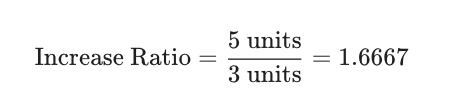
This represents a 66.67% increase in the foundational basic pay calculation even before factoring in inflation or the fitment factor.
Impact on Fitment Factor
The Fitment Factor is the multiplier used to transition from old pay to new pay.
- 7th CPC Factor: 2.57
- Union Demand for 8th CPC: Between 3.00 and 3.25
By increasing the family unit size, the “justifiable” fitment factor naturally rises. Experts suggest that if the 5-unit model is accepted, the minimum basic pay—currently at ₹18,000—could theoretically jump to over ₹50,000.
Comparative Scenarios for 8th CPC
Based on current union demands and projections for 2026, here is how the salary structure might shift:
| Particulars | Current (3 Units) | Proposed (5 Units) |
| Minimum Basic Pay | ₹18,000 | ₹51,480 – ₹54,000 (est.) |
| Fitment Factor | 2.57 | 3.00 – 3.25 |
| Annual Increment | 3% | 5% – 7% |
| Pension Base | 50% of Basic | 50% of (Higher) Basic |
The 8th Pay Commission was formally approved in January 2025 and is expected to have an effective date of January 1, 2026. However, the commission typically has 18 months to submit its report.
If the government yields to the demand for a 5-member family unit, it will mark the most significant revision in the history of Indian central pay structures. This would not only benefit 48 lakh active employees but would also provide a massive boost to over 67 lakh pensioners, as their pensions are directly linked to the basic pay scales.
Follow us on WhatsApp, Telegram, Twitter and Facebook for all latest updates