Home Blog Page 2

Return of PPOs and Pension Papers Post-Demise of Pensioner: CPAO Guidelines

Return of PPOs and Pension Papers Post-Demise of Pensioner: CPAO Guidelines

GOVERNMENT OF INDIA
MINISTRY OF FINANCE
DEPARTMENT OF EXPENDITURE
CENTRAL PENSION ACCOUNTING OFFICE
TRIKOOT-II, BHIKAJI CAMA PLACE
NEW DELHI-110066

CPAO/IT&Tech/BankPerformance/37Vol-IV/2025-26/e-6476/93

Dated: 24.12.2025

Office Memorandum

Subject: Guidelines regarding return of Pension Payment Order (PPOs) along with all the relevant pension papers by CPPCs to CPAO after the demise of Pensioner /Family Pensioner โ€” regarding

Attention is invited to the para 23 of guidelines/instructions of the Scheme Booklet under the Heading โ€œScheme for Payment of Pension to Central Government Civil Pensioners by the Authorized Banksโ€ issued by CPAO to be followed by the Centralized Pension Processing Centre (CPPC) of authorized banks regarding return of PPOs of the Central Civil Pensioners/Family Pensioners, whereinit has clearly been mentioned that the CPPC of authorized banks will return the disburserโ€™s portion of PPOs of the Central Civil Pensioners/Family Pensioners along with the death certificate and other relevant documents (SSA issued by the CPAO time to time) to CPAO. All PPOs requiring return to PAOs along with death certificate and other relevant documents after the demise of pensioners/family pensioners, must be routed through CPAO only.Central Government Jobs

2. However, it has been observed that some CPPCs/ Banks are returning the Pension Payment Orders (PPOs) directly to the concerned PAOs/ Departments after the demise of pensioners/family pensioners, which is in contravention to the prescribed procedure laid down for dealing with PPOs in such cases.

3. Hence, all authorized CPPCs and Bank branches handling Central (Civil) Pension disbursement are directed to comply with the above instructions without fail; and any deviation from the above instructions shall be viewed seriously and suitable action shall be initiated.

This issues with the approval of the Chief Controller (Pensions).

Sd/-
(Ajay Chaudhary)
Sr. Accounts Officer (IT & Tech)

Follow us on WhatsApp, Telegram, Twitter and Facebook for all latest updates
OPS vs NPS vs TAPS: Comparison of Pension Schemes: Key Highlights of TAPS (Tamil Nadu)

OPS vs NPS vs TAPS: Comparison of Pension Schemes: Key Highlights of TAPS (Tamil Nadu)

On January 3, 2026, the Tamil Nadu government officially announced the Tamil Nadu Assured Pension Scheme (TAPS). This scheme is a hybrid model designed to satisfy the long-standing demand for the restoration of the Old Pension Scheme (OPS) while maintaining the contributory framework of the National Pension System (NPS).

Below is the comparison between the newly launched TAPS, the NPS, and the OPS

FeatureOld Pension Scheme (OPS)National Pension Scheme (NPS)TN Assured Pension Scheme (TAPS)
Basic NatureDefined Benefit (Guaranteed)Defined Contribution (Market-linked)Assured Benefit (Hybrid)
Employee ContributionNil10% of Basic + DA10% of Basic + DA
Govt ContributionFully funded by State14% of Basic + DAFull additional funding required to meet the 50% assurance
Pension Amount50% of last drawn payDepends on market returns50% of last drawn basic pay
Inflation ProtectionDA hikes twice a yearNone (depends on annuity)DA hikes twice a year (matching active employees)
Family Pension60% of pension to spouseBased on corpus/annuity60% of pension to spouse
GratuityUp to โ‚น20 LakhNo fixed gratuityUp to โ‚น25 Lakh
Minimum PensionFixed by Pay CommissionNo guaranteed minimumGuaranteed minimum pension (even for short service)
Risk LevelRisk-freeMarket-linked riskRisk-free for employee

Also read: เฎคเฎฎเฎฟเฎดเฏเฎจเฎพเฎŸเฏ เฎ‰เฎฑเฏเฎคเฎฟเฎฏเฎณเฎฟเฎ•เฏเฎ•เฎชเฏเฎชเฎŸเฏเฎŸ เฎ“เฎฏเฏเฎตเฏ‚เฎคเฎฟเฎฏเฎคเฏ เฎคเฎฟเฎŸเฏเฎŸเฎฎเฏ (TAPS): เฎคเฎฟเฎŸเฏเฎŸเฎคเฏเฎคเฎฟเฎฉเฏ เฎšเฎฟเฎฑเฎชเฏเฎชเฎฎเฏเฎšเฎ™เฏเฎ•เฎณเฏ

Key Highlights of TAPS (Tamil Nadu)

The TAPS is specifically tailored for State Government employees and teachers who joined after April 1, 2003.

  • Last Drawn Pay Advantage: Unlike the Central Government’s Unified Pension Scheme (UPS)โ€”which calculates pension based on the average of the last 12 monthsโ€”the Tamil Nadu TAPS calculates it based on the last month’s basic pay, mirroring the original OPS benefit.
  • Special Compassionate Pension: Employees who joined under the Contributory Pension Scheme (CPS) but retired before the implementation of TAPS will be eligible for a “special compassionate pension.”
  • Lump Sum Gratuity: The retirement and death gratuity has been enhanced to a maximum of โ‚น25 Lakh.
  • Fiscal Commitment: The Tamil Nadu government has committed an initial โ‚น13,000 crore to the fund, with an annual recurring contribution of approximately โ‚น11,000 crore to bridge the gap between employee contributions and the 50% guarantee.

Summary: Which is better?

  • TAPS effectively acts as “OPS via the back door.” It provides the same security as the Old Pension Scheme (50% guarantee + DA) but requires the employee to continue the 10% contribution they were already making under the CPS/NPS.
  • For Employees: It removes the market uncertainty of NPS while ensuring their pension grows with inflation (DA), which was the biggest drawback of the new system.

Follow us on WhatsApp, Telegram, Twitter and Facebook for all latest updates
Central Govt Employees Likely To Get 2% DA Hike from Jan 2026 ahead of 8th CPC

Central Govt Employees Likely To Get 2% DA Hike from Jan 2026 ahead of 8th CPC

The latest data from the Labour Bureau regarding the All-India Consumer Price Index for Industrial Workers (AICPI-IW) for November 2025 has cleared the path for the upcoming Dearness Allowance (DA) revision. As of January 2026, central government employees and pensioners are looking at a confirmed increase, with the 12-month average pointing toward a 2% hike

1. AICPIN Data for November 2025: The Numbers

On December 31, 2025, the Ministry of Labour & Employment released the AICPI-IW for November 2025. The index saw a steady climb, which is the primary driver for the DA calculation.

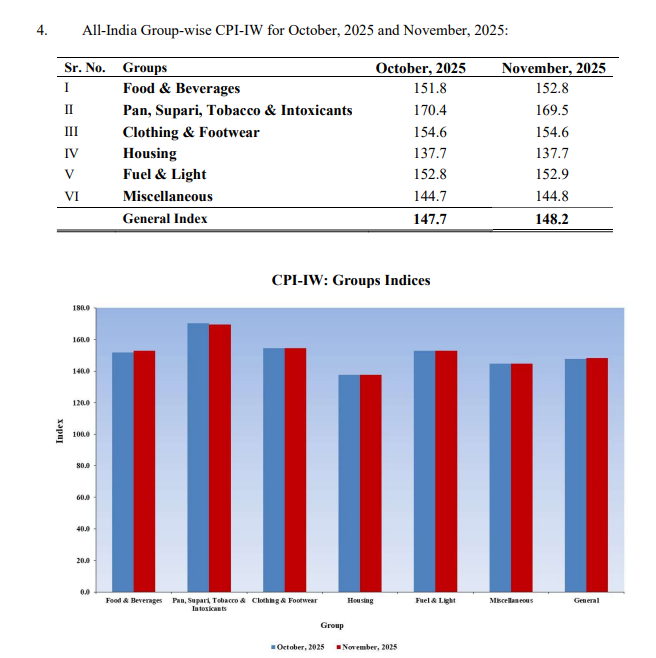
  • October 2025 Index: 147.7
  • November 2025 Index: 148.2 (+0.5 points)
  • Current DA Rate: 58% (Effective since July 2025)

This 0.5-point jump in November is significant. It brings the 12-month average of the consumer price index to a level that mathematically secures a minimum of 60% total DA.


Also Check

DA from January 2026 Calculator

DA Calculation Sheet


2. Why is a 2% Hike “Almost Confirmed”?

The formula for DA is based on a 12-month average of the AICPI-IW. A crucial aspect of this government policy is that fractions of a percent are ignored. Unlike standard mathematics where 0.5 and above is rounded up, the DA calculation only recognizes the whole number.

  • Scenario A: If the average results in 60.12%, the DA is 60%.
  • Scenario B: Even if the average reaches 60.94%, the DA is still 60%.

Why a 3% Hike is Mathematically Unlikely

To achieve a 3% hike (reaching 61%), the 12-month average would need to cross the 61.00 threshold exactly. Based on the November 2025 index of 148.2:

  1. The cumulative index points for the last 11 months are already locked in.
  2. If the December 2025 index stays at 148.2, the final calculation sits at approximately 59.94%.
  3. Because the government ignores everything after the decimal, this 59.94% is treated as 59% in the interim, but since we are currently at 58%, it confirms a 2% increase to reach the 60% mark.
  4. To hit 61%, the December index would need to jump by more than 10 points in a single monthโ€”a move that has never occurred in the history of the index.

Confirmed Status for Jan 2026

With the November 2025 figures now public, the 2% hike is essentially “locked.” Even a minor dip in the December inflation data would not be enough to drag the average below the 60.00% threshold, nor is any realistic jump enough to push it to 61%.

3. Impact on Salaries and Pensions

This revision will benefit over 1 crore central government employees and pensioners.14 Here is a quick look at how a 2% hike (moving from 58% to 60%) affects monthly payouts:

ComponentCurrent (58% DA)New (60% DA)Monthly Increase
Basic Pay: โ‚น18,000โ‚น10,440โ‚น10,800+โ‚น360
Basic Pay: โ‚น30,000โ‚น17,400โ‚น18,000+โ‚น600
Basic Pay: โ‚น50,000โ‚น29,000โ‚น30,000+โ‚น1,000

4. The 8th Pay Commission Connection

The January 2026 DA revision is uniquely important because January 1, 2026, marks the theoretical start date for the 8th Central Pay Commission (CPC) cycle.

Traditionally, when a new Pay Commission is implemented:

  • The existing DA (which will be 60%) is merged into the Basic Pay.
  • The DA is reset to 0% for the new pay scale.
  • While the 8th CPC implementation is still in its early stages, this 60% figure serves as the final “inflation buffer” that will determine the Fitment Factor (the multiplier used to jump from 7th CPC to 8th CPC salaries).

Conclusion & Timeline

While the data confirms a 2% hike is the most realistic outcome, the official announcement from the Union Cabinet is expected in March 2026. Once announced, the hike will be applied retrospectively from January 1, 2026, and employees will receive arrears for the preceding months.

Follow us on WhatsApp, Telegram, Twitter and Facebook for all latest updates
เฎคเฎฎเฎฟเฎดเฏเฎจเฎพเฎŸเฏ เฎ‰เฎฑเฏเฎคเฎฟเฎฏเฎณเฎฟเฎ•เฏเฎ•เฎชเฏเฎชเฎŸเฏเฎŸ เฎ“เฎฏเฏเฎตเฏ‚เฎคเฎฟเฎฏเฎคเฏ เฎคเฎฟเฎŸเฏเฎŸเฎฎเฏ (TAPS): เฎคเฎฟเฎŸเฏเฎŸเฎคเฏเฎคเฎฟเฎฉเฏ เฎšเฎฟเฎฑเฎชเฏเฎชเฎฎเฏเฎšเฎ™เฏเฎ•เฎณเฏ

เฎคเฎฎเฎฟเฎดเฏเฎจเฎพเฎŸเฏ เฎ‰เฎฑเฏเฎคเฎฟเฎฏเฎณเฎฟเฎ•เฏเฎ•เฎชเฏเฎชเฎŸเฏเฎŸ เฎ“เฎฏเฏเฎตเฏ‚เฎคเฎฟเฎฏเฎคเฏ เฎคเฎฟเฎŸเฏเฎŸเฎฎเฏ (TAPS)

เฎ…เฎฐเฎšเฏ เฎ…เฎฒเฏเฎตเฎฒเฎฐเฏเฎ•เฎณเฏ เฎฎเฎฑเฏเฎฑเฏเฎฎเฏ เฎ†เฎšเฎฟเฎฐเฎฟเฎฏเฎฐเฏเฎ•เฎณเฎฟเฎฉเฏ เฎ‡เฎฐเฏเฎชเฎคเฎพเฎฃเฏเฎŸเฏเฎ•เฎพเฎฒเฎ•เฏ เฎ•เฏ‹เฎฐเฎฟเฎ•เฏเฎ•เฏˆเฎฏเฎฟเฎฉเฏˆ เฎจเฎฟเฎฑเฏˆเฎตเฏ‡เฎฑเฏเฎฑเฏเฎฎเฏ เฎตเฎ•เฏˆเฎฏเฎฟเฎฒเฏ, เฎชเฎดเฏˆเฎฏ เฎ“เฎฏเฏเฎตเฏ‚เฎคเฎฟเฎฏเฎคเฏ เฎคเฎฟเฎŸเฏเฎŸเฎคเฏเฎคเฎฟเฎฉเฏ เฎชเฎฒเฎฉเฏเฎ•เฎณเฏˆ เฎตเฎดเฎ™เฏเฎ•เฎ•เฏเฎ•เฏ‚เฎŸเฎฟเฎฏ โ€œเฎคเฎฎเฎฟเฎดเฏเฎจเฎพเฎŸเฏ เฎ‰เฎฑเฏเฎคเฎฟเฎฏเฎณเฎฟเฎ•เฏเฎ•เฎชเฏเฎชเฎŸเฏเฎŸ เฎ“เฎฏเฏเฎตเฏ‚เฎคเฎฟเฎฏเฎคเฏ เฎคเฎฟเฎŸเฏเฎŸเฎฎเฏ (Tamil Nadu Assured Pension Scheme โ€“ TAPS)โ€ เฎšเฏ†เฎฏเฎฒเฏเฎชเฎŸเฏเฎคเฏเฎคเฎชเฏเฎชเฎŸเฏเฎฎเฏ เฎŽเฎฉเฏเฎฑเฏ เฎฎเฎพเฎฃเฏเฎชเฏเฎฎเฎฟเฎ•เฏ เฎฎเฏเฎคเฎฒเฎฎเฏˆเฎšเฏเฎšเฎฐเฏ เฎคเฎฟเฎฐเฏ. เฎฎเฏ.เฎ•.เฎธเฏเฎŸเฎพเฎฒเฎฟเฎฉเฏ เฎ…เฎตเฎฐเฏเฎ•เฎณเฏ เฎ†เฎฃเฏˆเฎฏเฎฟเฎŸเฏเฎŸเฏเฎณเฏเฎณเฎพเฎฐเฏ.

เฎ…เฎฐเฎšเฏ เฎ…เฎฒเฏเฎตเฎฒเฎฐเฏเฎ•เฎณเฎฟเฎฉเฏ เฎจเฎฒเฎฉเฏ เฎ•เฎพเฎชเฏเฎชเฎคเฎฟเฎฒเฏ เฎ‡เฎจเฏเฎค เฎ…เฎฐเฎšเฏ เฎŽเฎŸเฏเฎคเฏเฎคเฏเฎณเฏเฎณ เฎฎเฏเฎ•เฏเฎ•เฎฟเฎฏ เฎจเฎŸเฎตเฎŸเฎฟเฎ•เฏเฎ•เฏˆเฎ•เฎณเฏ:

  • เฎ…เฎ•เฎตเฎฟเฎฒเฏˆเฎชเฏเฎชเฎŸเฎฟ เฎ‰เฎฏเฎฐเฏเฎตเฏ: 2022-เฎ†เฎฎเฏ เฎ†เฎฃเฏเฎŸเฏ เฎฎเฏเฎคเฎฒเฏ เฎ’เฎฉเฏเฎฑเฎฟเฎฏ เฎ…เฎฐเฎšเฎฟเฎฑเฏเฎ•เฏ เฎ‡เฎฃเฏˆเฎฏเฎพเฎ• เฎ…เฎ•เฎตเฎฟเฎฒเฏˆเฎชเฏเฎชเฎŸเฎฟ เฎ‰เฎฏเฎฐเฏเฎตเฏ เฎคเฏŠเฎŸเฎฐเฏเฎจเฏเฎคเฏ เฎตเฎดเฎ™เฏเฎ•เฎชเฏเฎชเฎŸเฏเฎŸเฏ เฎตเฎฐเฏเฎ•เฎฟเฎฑเฎคเฏ.
  • เฎˆเฎŸเฏเฎŸเฎฟเฎฏ เฎตเฎฟเฎŸเฏเฎชเฏเฎชเฏ: 01.10.2025 เฎฎเฏเฎคเฎฒเฏ เฎ…เฎฐเฎšเฏเฎชเฏ เฎชเฎฃเฎฟเฎฏเฎพเฎณเฎฐเฏเฎ•เฎณเฏ เฎคเฎ™เฏเฎ•เฎณเฎคเฏ เฎˆเฎŸเฏเฎŸเฎฟเฎฏ เฎตเฎฟเฎŸเฏเฎชเฏเฎชเฎฟเฎฉเฏˆ เฎ’เฎชเฏเฎชเฎŸเฏˆเฎชเฏเฎชเฏ เฎšเฏ†เฎฏเฏเฎคเฏ เฎชเฎฃเฎฎเฎพเฎ•เฎชเฏ เฎชเฏ†เฎฑเฏเฎฑเฏเฎ•เฏเฎ•เฏŠเฎณเฏเฎณเฏเฎฎเฏ เฎจเฎŸเฏˆเฎฎเฏเฎฑเฏˆ เฎฎเฏ€เฎฃเฏเฎŸเฏเฎฎเฏ เฎšเฏ†เฎฏเฎฒเฏเฎชเฎŸเฏเฎคเฏเฎคเฎชเฏเฎชเฎŸเฏเฎŸเฏเฎณเฏเฎณเฎคเฏ.
  • เฎ•เฎพเฎชเฏเฎชเฏ€เฎŸเฏเฎŸเฏเฎคเฏ เฎคเฏŠเฎ•เฏˆ: เฎ…เฎฐเฎšเฏเฎชเฏ เฎชเฎฃเฎฟเฎฏเฎพเฎณเฎฐเฏเฎ•เฎณเฏ เฎตเฎฟเฎชเฎคเฏเฎคเฎฟเฎฒเฏ เฎ‰เฎฏเฎฟเฎฐเฎฟเฎดเฎ•เฏเฎ• เฎจเฏ‡เฎฐเฏเฎจเฏเฎคเฎพเฎฒเฏ 1 เฎ•เฏ‹เฎŸเฎฟ เฎฐเฏ‚เฎชเฎพเฎฏเฏเฎฎเฏ, เฎ‡เฎฏเฎฑเฏเฎ•เฏˆ เฎฎเฎฐเฎฃเฎฎเฎŸเฏˆเฎจเฏเฎคเฎพเฎฒเฏ 10 เฎ‡เฎฒเฎŸเฏเฎšเฎฎเฏ เฎฐเฏ‚เฎชเฎพเฎฏเฏเฎฎเฏ เฎ†เฎฏเฏเฎณเฏ เฎ•เฎพเฎชเฏเฎชเฏ€เฎŸเฏเฎŸเฏเฎคเฏ เฎคเฏŠเฎ•เฏˆเฎฏเฎพเฎ• เฎตเฎดเฎ™เฏเฎ•เฎชเฏเฎชเฎŸเฏเฎ•เฎฟเฎฑเฎคเฏ.
  • เฎ•เฎฒเฏเฎตเฎฟ เฎฎเฏเฎฉเฏเฎชเฎฃเฎฎเฏ: เฎคเฏŠเฎดเฎฟเฎฑเฏเฎ•เฎฒเฏเฎตเฎฟเฎ•เฏเฎ•เฏ 1 เฎ‡เฎฒเฎŸเฏเฎšเฎฎเฏ เฎฐเฏ‚เฎชเฎพเฎฏเฎพเฎ•เฎตเฏเฎฎเฏ, เฎ•เฎฒเฏˆ เฎฎเฎฑเฏเฎฑเฏเฎฎเฏ เฎ…เฎฑเฎฟเฎตเฎฟเฎฏเฎฒเฏ เฎ•เฎฒเฏเฎตเฎฟเฎ•เฏเฎ•เฏ 50 เฎ†เฎฏเฎฟเฎฐเฎฎเฏ เฎฐเฏ‚เฎชเฎพเฎฏเฎพเฎ•เฎตเฏเฎฎเฏ เฎ•เฎฒเฏเฎตเฎฟ เฎฎเฏเฎฉเฏเฎชเฎฃเฎฎเฏ เฎ‰เฎฏเฎฐเฏเฎคเฏเฎคเฎฟ เฎตเฎดเฎ™เฏเฎ•เฎชเฏเฎชเฎŸเฏเฎ•เฎฟเฎฑเฎคเฏ.
  • เฎคเฎฟเฎฐเฏเฎฎเฎฃ เฎฎเฏเฎฉเฏเฎชเฎฃเฎฎเฏ: เฎ…เฎฐเฎšเฏเฎชเฏ เฎชเฎฃเฎฟเฎฏเฎพเฎณเฎฐเฏเฎ•เฎณเฏเฎ•เฏเฎ•เฏ เฎตเฎดเฎ™เฏเฎ•เฎชเฏเฎชเฎŸเฏเฎŸเฏ เฎตเฎจเฏเฎค เฎคเฎฟเฎฐเฏเฎฎเฎฃ เฎฎเฏเฎฉเฏเฎชเฎฃเฎฎเฏ 10 เฎ†เฎฏเฎฟเฎฐเฎฎเฏ เฎฐเฏ‚เฎชเฎพเฎฏเฎฟเฎฒเฎฟเฎฐเฏเฎจเฏเฎคเฏ 5 เฎ‡เฎฒเฎŸเฏเฎšเฎฎเฏ เฎฐเฏ‚เฎชเฎพเฎฏเฎพเฎ• เฎ‰เฎฏเฎฐเฏเฎคเฏเฎคเฎชเฏเฎชเฎŸเฏเฎŸเฏเฎณเฏเฎณเฎคเฏ.
  • เฎตเฏ€เฎŸเฏ เฎ•เฎŸเฏเฎŸเฏเฎฎเฏ เฎฎเฏเฎฉเฏเฎชเฎฃเฎฎเฏ: เฎตเฏ€เฎŸเฏ เฎ•เฎŸเฏเฎŸเฏเฎตเฎคเฎฑเฏเฎ•เฎพเฎฉ เฎฎเฏเฎฉเฏเฎชเฎฃเฎฎเฏ 40 เฎ‡เฎฒเฎŸเฏเฎšเฎฎเฏ เฎฐเฏ‚เฎชเฎพเฎฏเฎฟเฎฒเฎฟเฎฐเฏเฎจเฏเฎคเฏ 50 เฎ‡เฎฒเฎŸเฏเฎšเฎฎเฏ เฎฐเฏ‚เฎชเฎพเฎฏเฎพเฎ• เฎ‰เฎฏเฎฐเฏเฎคเฏเฎคเฎฟ เฎตเฎดเฎ™เฏเฎ•เฎชเฏเฎชเฎŸเฏเฎ•เฎฟเฎฑเฎคเฏ.
  • เฎฎเฎ•เฎชเฏเฎชเฏ‡เฎฑเฏ เฎตเฎฟเฎŸเฏเฎชเฏเฎชเฏ: เฎชเฏ†เฎฃเฏ เฎ…เฎฐเฎšเฏ เฎ…เฎฒเฏเฎตเฎฒเฎฐเฏเฎ•เฎณเฎฟเฎฉเฏ เฎฎเฎ•เฎชเฏเฎชเฏ‡เฎฑเฏ เฎตเฎฟเฎŸเฏเฎชเฏเฎชเฏ 9 เฎฎเฎพเฎคเฎ™เฏเฎ•เฎณเฎฟเฎฒเฎฟเฎฐเฏเฎจเฏเฎคเฏ 12 เฎฎเฎพเฎคเฎ™เฏเฎ•เฎณเฎพเฎ• เฎ‰เฎฏเฎฐเฏเฎคเฏเฎคเฎชเฏเฎชเฎŸเฏเฎŸเฏเฎณเฏเฎณเฎคเฏ.
  • เฎ“เฎฏเฏเฎตเฏ‚เฎคเฎฟเฎฏเฎชเฏ เฎชเฎฃเฎฟเฎ•เฏเฎ•เฏŠเฎŸเฏˆ: เฎ“เฎฏเฏเฎตเฏ‚เฎคเฎฟเฎฏเฎชเฏ เฎชเฎฃเฎฟเฎ•เฏเฎ•เฏŠเฎŸเฏˆ 20 เฎ‡เฎฒเฎŸเฏเฎšเฎคเฏเฎคเฎฟเฎฒเฎฟเฎฐเฏเฎจเฏเฎคเฏ 25 เฎ‡เฎฒเฎŸเฏเฎšเฎฎเฏ เฎฐเฏ‚เฎชเฎพเฎฏเฎพเฎ• เฎ‰เฎฏเฎฐเฏเฎคเฏเฎคเฎฟ เฎตเฎดเฎ™เฏเฎ•เฎชเฏเฎชเฎŸเฏเฎ•เฎฟเฎฑเฎคเฏ.

Also Read in English : Tamil Nadu Assured Pension Scheme (TAPS): TN Govt

เฎชเฏเฎคเฎฟเฎฏ TAPS เฎคเฎฟเฎŸเฏเฎŸเฎคเฏเฎคเฎฟเฎฉเฏ เฎšเฎฟเฎฑเฎชเฏเฎชเฎฎเฏเฎšเฎ™เฏเฎ•เฎณเฏ:

เฎ…เฎฐเฎšเฏ เฎ•เฏ‚เฎŸเฏเฎคเฎฒเฏ เฎคเฎฒเฏˆเฎฎเฏˆเฎšเฏ เฎšเฏ†เฎฏเฎฒเฎพเฎณเฎฐเฏ เฎคเฎฟเฎฐเฏ. เฎ•เฎ•เฎฉเฏเฎคเฏ€เฎชเฏเฎšเฎฟเฎ™เฏ เฎชเฏ‡เฎŸเฎฟ, เฎ‡.เฎ†.เฎช. เฎคเฎฒเฏˆเฎฎเฏˆเฎฏเฎฟเฎฒเฎพเฎฉ เฎ•เฏเฎดเฏเฎตเฎฟเฎฉเฏ เฎ…เฎฑเฎฟเฎ•เฏเฎ•เฏˆเฎฏเฏˆเฎชเฏ เฎชเฎฐเฎฟเฎšเฏ€เฎฒเฎฟเฎคเฏเฎคเฏ เฎ‡เฎคเฏเฎคเฎฟเฎŸเฏเฎŸเฎฎเฏ เฎ…เฎฑเฎฟเฎตเฎฟเฎ•เฏเฎ•เฎชเฏเฎชเฎŸเฏเฎŸเฏเฎณเฏเฎณเฎคเฏ.

  1. 50% เฎ“เฎฏเฏเฎตเฏ‚เฎคเฎฟเฎฏเฎฎเฏ: เฎฎเฎพเฎจเฎฟเฎฒ เฎ…เฎฐเฎšเฏ เฎ…เฎฒเฏเฎตเฎฒเฎฐเฏเฎ•เฎณเฏ เฎชเฏ†เฎฑเฏเฎฑ เฎ•เฎŸเฏˆเฎšเฎฟ เฎฎเฎพเฎค เฎŠเฎคเฎฟเฎฏเฎคเฏเฎคเฎฟเฎฒเฏ 50 เฎšเฎคเฎตเฏ€เฎคเฎฎเฏ เฎ‰เฎฑเฏเฎคเฎฟเฎฏเฎณเฎฟเฎ•เฏเฎ•เฎชเฏเฎชเฎŸเฏเฎŸ เฎ“เฎฏเฏเฎตเฏ‚เฎคเฎฟเฎฏเฎฎเฎพเฎ• เฎตเฎดเฎ™เฏเฎ•เฎชเฏเฎชเฎŸเฏเฎฎเฏ.
  2. เฎ…เฎฐเฎšเฎฟเฎฉเฏ เฎชเฎ™เฏเฎ•เฎณเฎฟเฎชเฏเฎชเฏ: เฎชเฎฃเฎฟเฎฏเฎพเฎณเฎฐเฏเฎ•เฎณเฎฟเฎฉเฏ 10 เฎšเฎคเฎตเฏ€เฎค เฎชเฎ™เฏเฎ•เฎณเฎฟเฎชเฏเฎชเฏ‹เฎŸเฏ, เฎ“เฎฏเฏเฎตเฏ‚เฎคเฎฟเฎฏ เฎจเฎฟเฎคเฎฟเฎฏเฎคเฏเฎคเฎฟเฎฑเฏเฎ•เฏเฎคเฏ เฎคเฏ‡เฎตเฏˆเฎชเฏเฎชเฎŸเฏเฎฎเฏ เฎ•เฏ‚เฎŸเฏเฎคเฎฒเฏ เฎจเฎฟเฎคเฎฟ เฎฎเฏเฎดเฏเฎตเฎคเฏˆเฎฏเฏเฎฎเฏ เฎคเฎฎเฎฟเฎดเฏเฎจเฎพเฎŸเฏ เฎ…เฎฐเฎšเฏ‡ เฎเฎฑเฏเฎ•เฏเฎฎเฏ.
  3. เฎ…เฎ•เฎตเฎฟเฎฒเฏˆเฎชเฏเฎชเฎŸเฎฟ เฎ‰เฎฏเฎฐเฏเฎตเฏ: เฎ“เฎฏเฏเฎตเฏ‚เฎคเฎฟเฎฏเฎคเฎพเฎฐเฎฐเฏเฎ•เฎณเฏเฎ•เฏเฎ•เฏ เฎ†เฎฃเฏเฎŸเฏเฎคเฏ‹เฎฑเฏเฎฎเฏ เฎ†เฎฑเฏ เฎฎเฎพเฎคเฎคเฏเฎคเฎฟเฎฑเฏเฎ•เฏ เฎ’เฎฐเฏเฎฎเฏเฎฑเฏˆ เฎ…เฎฐเฎšเฏ เฎ…เฎฒเฏเฎตเฎฒเฎฐเฏเฎ•เฎณเฏเฎ•เฏเฎ•เฏ เฎ‡เฎฃเฏˆเฎฏเฎพเฎฉ เฎ…เฎ•เฎตเฎฟเฎฒเฏˆเฎชเฏเฎชเฎŸเฎฟ เฎ‰เฎฏเฎฐเฏเฎตเฏ เฎ…เฎณเฎฟเฎ•เฏเฎ•เฎชเฏเฎชเฎŸเฏเฎฎเฏ.
  4. เฎ•เฏเฎŸเฏเฎฎเฏเฎช เฎ“เฎฏเฏเฎตเฏ‚เฎคเฎฟเฎฏเฎฎเฏ: เฎ“เฎฏเฏเฎตเฏ‚เฎคเฎฟเฎฏเฎคเฎพเฎฐเฎฐเฏ เฎ‡เฎฑเฎจเฏเฎคเฏเฎตเฎฟเฎŸเฏเฎŸเฎพเฎฒเฏ, เฎ…เฎตเฎฐเฏ เฎชเฎฐเฎฟเฎจเฏเฎคเฏเฎฐเฏˆเฎคเฏเฎค เฎ•เฏเฎŸเฏเฎฎเฏเฎช เฎ‰เฎฑเฏเฎชเฏเฎชเฎฟเฎฉเฎฐเฏเฎ•เฎณเฏเฎ•เฏเฎ•เฏ 60 เฎšเฎคเฎตเฏ€เฎคเฎฎเฏ เฎ•เฏเฎŸเฏเฎฎเฏเฎช เฎ“เฎฏเฏเฎตเฏ‚เฎคเฎฟเฎฏเฎฎเฎพเฎ• เฎตเฎดเฎ™เฏเฎ•เฎชเฏเฎชเฎŸเฏเฎฎเฏ.
  5. เฎชเฎฃเฎฟเฎ•เฏเฎ•เฏŠเฎŸเฏˆ: เฎ“เฎฏเฏเฎตเฏ เฎชเฏ†เฎฑเฏเฎฎเฏ เฎชเฏ‹เฎคเฏเฎฎเฏ, เฎชเฎฃเฎฟเฎ•เฏเฎ•เฎพเฎฒเฎคเฏเฎคเฎฟเฎฒเฏ เฎ‡เฎฑเฎ•เฏเฎ• เฎจเฏ‡เฎฐเฎฟเฎŸเฏเฎฎเฏ เฎชเฏ‹เฎคเฏเฎฎเฏ 25 เฎ‡เฎฒเฎŸเฏเฎšเฎฎเฏ เฎฐเฏ‚เฎชเฎพเฎฏเฏเฎ•เฏเฎ•เฏ เฎฎเฎฟเฎ•เฎพเฎฎเฎฒเฏ เฎชเฎฃเฎฟเฎ•เฏเฎ•เฏŠเฎŸเฏˆ เฎตเฎดเฎ™เฏเฎ•เฎชเฏเฎชเฎŸเฏเฎฎเฏ.
  6. เฎ•เฏเฎฑเฏˆเฎจเฏเฎคเฎชเฎŸเฏเฎš เฎ“เฎฏเฏเฎตเฏ‚เฎคเฎฟเฎฏเฎฎเฏ: เฎคเฎ•เฏเฎคเฎฟเฎชเฏ เฎชเฎฃเฎฟเฎ•เฏเฎ•เฎพเฎฒเฎคเฏเฎคเฏˆ เฎจเฎฟเฎฑเฏˆเฎตเฏ เฎšเฏ†เฎฏเฏเฎฏเฎพเฎฎเฎฒเฏ เฎ“เฎฏเฏเฎตเฏ เฎชเฏ†เฎฑเฏเฎฎเฏ เฎ…เฎฒเฏเฎตเฎฒเฎฐเฏเฎ•เฎณเฏเฎ•เฏเฎ•เฏเฎฎเฏ เฎ•เฏเฎฑเฏˆเฎจเฏเฎคเฎชเฎŸเฏเฎš เฎ“เฎฏเฏเฎตเฏ‚เฎคเฎฟเฎฏเฎฎเฏ เฎตเฎดเฎ™เฏเฎ•เฎชเฏเฎชเฎŸเฏเฎฎเฏ.
  7. เฎšเฎฟเฎฑเฎชเฏเฎชเฏ เฎ•เฎฐเฏเฎฃเฏˆ เฎ“เฎฏเฏเฎตเฏ‚เฎคเฎฟเฎฏเฎฎเฏ: เฎชเฎ™เฏเฎ•เฎณเฎฟเฎชเฏเฎชเฏ เฎ“เฎฏเฏเฎตเฏ‚เฎคเฎฟเฎฏเฎคเฏ เฎคเฎฟเฎŸเฏเฎŸเฎคเฏเฎคเฎฟเฎฉเฏ (CPS) เฎ•เฏ€เฎดเฏ เฎชเฎฃเฎฟเฎฏเฎฟเฎฒเฏ เฎšเฏ‡เฎฐเฏเฎจเฏเฎคเฏ, เฎ‡เฎคเฏเฎคเฎฟเฎŸเฏเฎŸเฎฎเฏ เฎตเฎฐเฏเฎตเฎคเฎฑเฏเฎ•เฏ เฎฎเฏเฎฉเฏเฎฉเฎฐเฏ เฎ“เฎฏเฏเฎตเฏ เฎชเฏ†เฎฑเฏเฎฑเฎตเฎฐเฏเฎ•เฎณเฏเฎ•เฏเฎ•เฏ เฎšเฎฟเฎฑเฎชเฏเฎชเฏ เฎ•เฎฐเฏเฎฃเฏˆ เฎ“เฎฏเฏเฎตเฏ‚เฎคเฎฟเฎฏเฎฎเฏ เฎตเฎดเฎ™เฏเฎ•เฎชเฏเฎชเฎŸเฏเฎฎเฏ.

เฎ‡เฎคเฏเฎคเฎฟเฎŸเฏเฎŸเฎคเฏเฎคเฏˆ เฎ…เฎฑเฎฟเฎฎเฏเฎ•เฎชเฏเฎชเฎŸเฏเฎคเฏเฎคเฏเฎตเฎคเฎพเฎฒเฏ เฎคเฎฎเฎฟเฎดเฏเฎจเฎพเฎŸเฏ เฎ…เฎฐเฎšเฏ เฎ•เฏ‚เฎŸเฏเฎคเฎฒเฎพเฎ• 13 เฎ†เฎฏเฎฟเฎฐเฎฎเฏ เฎ•เฏ‹เฎŸเฎฟ เฎฐเฏ‚เฎชเฎพเฎฏเฏเฎฎเฏ, เฎ†เฎฃเฏเฎŸเฏเฎคเฏ‹เฎฑเฏเฎฎเฏ เฎ…เฎฐเฎšเฎฟเฎฉเฏ เฎชเฎ™เฏเฎ•เฎณเฎฟเฎชเฏเฎชเฎพเฎ• เฎšเฏเฎฎเฎพเฎฐเฏ 11 เฎ†เฎฏเฎฟเฎฐเฎฎเฏ เฎ•เฏ‹เฎŸเฎฟ เฎฐเฏ‚เฎชเฎพเฎฏเฏเฎฎเฏ เฎตเฎดเฎ™เฏเฎ•เฏเฎฎเฏ. เฎชเฎดเฏˆเฎฏ เฎ“เฎฏเฏเฎตเฏ‚เฎคเฎฟเฎฏเฎคเฏ เฎคเฎฟเฎŸเฏเฎŸเฎคเฏเฎคเฎฟเฎฑเฏเฎ•เฏ เฎ‡เฎฃเฏˆเฎฏเฎพเฎฉ เฎชเฎฒเฎฉเฏเฎ•เฎณเฏˆเฎคเฏ เฎคเฎฐเฏเฎฎเฏ เฎ‡เฎคเฏเฎคเฎฟเฎŸเฏเฎŸเฎคเฏเฎคเฎฟเฎฑเฏเฎ•เฏ เฎฎเฏเฎดเฏ เฎ’เฎคเฏเฎคเฏเฎดเฏˆเฎชเฏเฎชเฏ เฎจเฎฒเฏเฎ•เฏเฎฎเฎพเฎฑเฏ เฎฎเฎพเฎฃเฏเฎชเฏเฎฎเฎฟเฎ•เฏ เฎฎเฏเฎคเฎฒเฎฎเฏˆเฎšเฏเฎšเฎฐเฏ เฎ…เฎตเฎฐเฏเฎ•เฎณเฏ เฎ•เฏ‡เฎŸเฏเฎŸเฏเฎ•เฏเฎ•เฏŠเฎฃเฏเฎŸเฏเฎณเฏเฎณเฎพเฎฐเฏ.

Follow us on WhatsApp, Telegram, Twitter and Facebook for all latest updates
Tamil Nadu Assured Pension Scheme (TAPS): TN Govt

Tamil Nadu Assured Pension Scheme (TAPS): TN Govt

To fulfill the twenty-year demand of Tamil Nadu government employees and teachers, the Honorable Chief Minister of Tamil Nadu, Thiru. M.K. Stalin, has ordered the implementation of a new scheme titled “Tamil Nadu Assured Pension Scheme (TAPS),” which provides the benefits of the old pension scheme.

Government employees are the wheels of the vehicle of governance. These wheels travel to ensure that the government’s welfare schemes reach the very last person in society. Recognizing this, the Dravidian Model government, following the path of Muthamizh Arignar Kalaignar, has always functioned with concern for the welfare of government employees and teachers.

Since assuming office in 2021, this government has been implementing various schemes to protect the interests of all sections of the people. To safeguard the welfare of government employees and teachers, who act as the hands of the government, several necessary measures have been taken.

Despite the financial burden caused by the continuous reduction in tax sharing and funding from the Union Government, and the decrease in state tax revenue due to GST changes, the Honorable Chief Minister continues to protect the welfare of employees. Notable measures include:

Also Read: เฎคเฎฎเฎฟเฎดเฏเฎจเฎพเฎŸเฏ เฎ‰เฎฑเฏเฎคเฎฟเฎฏเฎณเฎฟเฎ•เฏเฎ•เฎชเฏเฎชเฎŸเฏเฎŸ เฎ“เฎฏเฏเฎตเฏ‚เฎคเฎฟเฎฏเฎคเฏ เฎคเฎฟเฎŸเฏเฎŸเฎฎเฏ (TAPS): เฎคเฎฟเฎŸเฏเฎŸเฎคเฏเฎคเฎฟเฎฉเฏ เฎšเฎฟเฎฑเฎชเฏเฎชเฎฎเฏเฎšเฎ™เฏเฎ•เฎณเฏ

  • Dearness Allowance (DA): DA increases, which were suspended during the COVID pandemic, have been provided on par with the Union Government since 2022 without delay.
  • Earned Leave: The procedure for employees to surrender earned leave for cash was reinstated effective 01.10.2025.
  • Insurance: A unique insurance scheme provides โ‚น1 crore for accidental death and โ‚น10 lakh for natural death.
  • Family Support: Financial assistance for the marriage of deceased employees’ children (โ‚น5 lakh to โ‚น10 lakh) and higher education assistance (up to โ‚น10 lakh) is provided through banks.
  • Education Advance: Advances for technical education were increased from โ‚น50,000 to โ‚น1 lakh, and for Arts and Science education from โ‚น25,000 to โ‚น50,000.
  • Marriage & Housing: Marriage advances were raised from โ‚น10,000 to โ‚น5 lakh. House building advances were increased from โ‚น40 lakh to โ‚น50 lakh, the highest among all states.
  • Maternity Leave: Female employees’ maternity leave was extended from 9 months to 12 months.
  • Retirement Benefits: Pensioners’ medical insurance was raised to โ‚น10 lakh, and the retirement gratuity was increased from โ‚น20 lakh to โ‚น25 lakh.

Key Features of the TAPS Scheme:

Following the recommendations of a committee led by Additional Chief Secretary Thiru. Gagandeep Singh Bedi, IAS, the government has introduced TAPS with the following benefits:

  1. 50% Assured Pension: Employees will be guaranteed a pension of 50% of their last drawn monthly salary. The state government will bear all additional costs for the pension fund beyond the employees’ 10% contribution.
  2. Dearness Allowance: Pensioners will receive DA increases every six months, equivalent to those provided to active government employees.
  3. Family Pension: In the event of a pensioner’s death, 60% of their pension will be provided to their nominated family members.
  4. Death/Retirement Gratuity: A gratuity not exceeding โ‚น25 lakh will be provided based on the service period.
  5. Minimum Pension: A minimum pension will be provided to all employees who retire after the implementation of TAPS, even if they have not completed the full qualifying service period.
  6. Special Compassionate Pension: Those who retired under the Contributory Pension Scheme (CPS) before the implementation of TAPS will receive a special compassionate pension.

To introduce this scheme, the Tamil Nadu government will provide an additional โ‚น13,000 crore to the pension fund, along with an annual contribution of approximately โ‚น11,000 crore.

Honorable Chief Minister Thiru. M.K. Stalin has requested government employees and teachers to unanimously welcome and provide full cooperation for this TAPS scheme, which fulfills a 20-year demand and ensures pension benefits equivalent to the old scheme.

Follow us on WhatsApp, Telegram, Twitter and Facebook for all latest updates
AICPIN for Nov 2025: November Data Signals a 2% DA Hike from January 2026

AICPIN for Nov 2025: November Data Signals a 2% DA Hike from January 2026

GOVERNMENT OF INDIA
MINISTRY OF LABOUR & EMPLOYMENT
LABOUR BUREAU

Shram Bureau Bhawan, Block No. 2,
Institutional Area, Sector 38 (West),
Chandigarh โ€“ 160036

F.No. 5/1/2021-CPI Dated: 31.12.2025

Press Release

Consumer Price Index for Industrial Workers (2016=100) โ€“ November, 2025

1.Labour Bureau, an attached office of the M/o Labour & Employment, has been compiling Consumer Price Index for Industrial Workers every month on the basis of retail prices collected from 317 markets spread over 88 industrially important centres in the country. The index for the month of November, 2025 is being released in this press release.

2. The All-India CPI-IW for November, 2025 increased by 0.5 point and stood at 148.2 (one hundred forty-eight point two).


Also Check

DA from January 2026 Calculator

DA Calculation Sheet


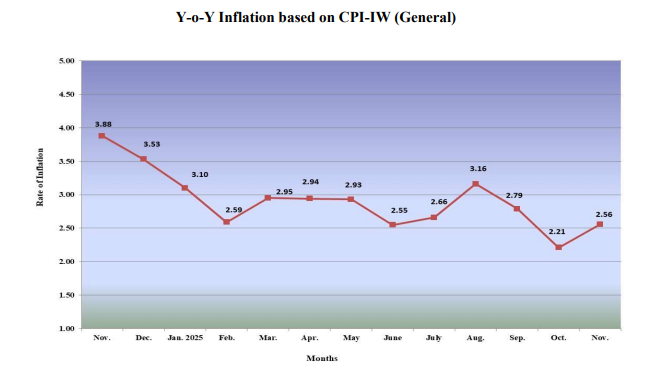
3. Year-on-year inflation for the month of November, 2025 stood at 2.56% as compared to 3.88% in November, 2024.

Follow us on WhatsApp, Telegram, Twitter and Facebook for all latest updates

DOPPW Clarification on limitation on amount of gratuity under the NPS on drawing separate gratuity for Military service

DOPPW Clarification on limitation on amount of gratuity under the NPS on drawing separate gratuity for Military service

No. 28/03/2025-P&PW(B)/10865
Government of India
Ministry of Personnel, Public Grievances and Pensions
Department of Pension and Pensioners’ Welfare

3rd Floors Lok Nayak Bhavan, Khan Market,
New Delhi. Dated the 26th December, 2025

OFFICE MEMORANDUM

Subject: Clarification on limitation on amount of gratuity under the National Pension System (NPS) on drawing separate gratuity for Military service – regarding.

The undersigned is directed to say that Rule 4 A of the Central Civil Services (Payment of Gratuity under NPS) Amendment Rules, 2025 provides for limitation of maximum admissible gratuity on availing separate gratuity For the Central Government service and for the service in PSUsi Autonomous bodies

2. In accordance with rule 4A of the Central Civil Services (Payment of Gratuity National Pension System) Amendment Rules. 2025, a Government servant who, having retired on superannuation gratuity or retiring gratuity or compulsory retirement gratuity or who is in receipt of a compassionate gratuity ati having been dismissed or removed from service, is subsequently re-employed, shall not be entitled to a separate gratuity for the period of his re-employment:

Provided that a Government servant who was previously appointed in an autonomous body or a public sector undertaking and was subsequently appointed, with proper permission of that body or undertaking, in the Government service, shall be eligible for gratuity for the service rendered in the Government in addition to the gratuity, if any, received by him from the autonomous body or the public sector undertaking for the service rendered in that body or undertaking:

Provided further that the total amount of gratuity in respect of the service rendered in the autonomous body or the public sector undertaking and the service rendered under the Government shall not exceed the amount that would have been admissible taking into account the entire service rendered by the Government servant in the autonomous body or the public sector undertaking and the Government and the emoluments on retirement from Government

3. Further, the Department of Pension and Pensioners’ Welfare has issued instructions on counting of past service for the purpose of grant of gratuity to Central Goverment employees covered under NPS vide OM No. 7/5/2012-P&PW(B) dated 12.02.2020. As per these instructions, if employees avails separate gratuity for his State Government service and Central Government service, then the admissible gratuity shall be subject to the condition that the total gratuity admissible in respect of the service rendered under the Government of India and that under the State Government, shall not exceed the amount that would have been admissible, had Government servant continued in Government service and retired on the same pay which he/ she drew on retirement from the later service.

4. References have been received in this Department seeking clarification with regard to limitation on grant of separate gratuity for the civil service in respect to Government servants rc-cmployed in civil service after rendering military service and has drawn separate gratuity for the pervious military service. This matter has been considered in consultation with Department of Expenditure. It is clarified that similar to the provisions under the CCS (Pension) Rules, 2021, the gratuity for the service rendered after re-employment in civil service or post under the CCS(Payment of Gratuity under NP S ) Rules, 2021, shall not he subject to any limitation with reference to the gratuity drawn by the Government servant in respect of thc military service.

5. This issues in consultation with of Ministry of Finance, Department of Expenditure vide ID their Note No. 1(8)/EV/2025 dated 11.11.2025.

6. In so far as the persons serving in the Indian Audit and Accounts Department are concerned, these orders are issued in consultation with Comptroller and Auditor General or India, as mandated under Article 148(5) of the Constitution of India.

7. All Ministries/Departments arc requested that the above provisions may be brought to the notice of the personnel dealing with the pensionary benefits in the Ministry/ Department and attached/ subordinate offices thereunder, for strict implementation

(S. Chakrabarti)
Under Secretary to the Government of India

To
All Ministries/Departments/Organisations,
(As per standard list)

Follow us on WhatsApp, Telegram, Twitter and Facebook for all latest updates

Government Clarifies Policy on Spousal Transfers for Employees

Government Clarifies Policy on Spousal Transfers for Employees

GOVERNMENT OF INDIA
MINISTRY OF PERSONNEL, PUBLIC GRIEVANCES AND PENSIONS
(DEPARTMENT OF PERSONNEL AND TRAINING)

RAJYA SABHA
UNSTARRED QUESTION NO. 2198
(ANSWERED ON 18.12.2025)

SPOUSAL TRANSFER FOR GOVERNMENT EMPLOYEES

2198.PROF. MANOJ KUMAR JHA:

Will the PRIME MINISTER be pleased to state:

(a) whether the Department of Personnel and Training (DoPT) permits spousal transfers for employees of autonomous bodies from one unit to another under the same Ministryอพ

(b) if so, the details of policy in respect of granting such permissions and the year-wise number of such transfer casesอพ and

(c) if not, the reasons therefor and the steps being taken by Government in this regard?

ANSWER
MINISTER OF STATE IN THE MINISTRY OF PERSONNEL, PUBLIC GRIEVANCES
AND PENSIONS AND MINISTER OF STATE IN THE PRIME MINISTERโ€™S OFFICE
(DR. JITENDRA SINGH)

(a) to (c): The Government has issued guidelines to all Ministries/ Departments on posting of husband and wife who are in Central/State Government service or in PSUs at the same station. Data on transfer cases are not maintained centrally as it is administered by Ministries/ Departments themselves.

Follow us on WhatsApp, Telegram, Twitter and Facebook for all latest updates

Public Notice: Important Update on Recruitment for KVS and NVS Teaching & Non-Teaching Posts

RECRUITMENT OF VARIOUS TEACHING & NON-TEACHING POSTS IN KENDRIYA VIDYALAYA SANGATHAN AND NAVODAYA VIDYALAYA SAMITI

PUBLIC NOTICE

In reference to Public Notice and Corrigendum โ€“ 2 dated 04th December 2025 regarding
RECRUITMENT NOTIFICATION 01/2025 for Recruitment of various teaching & non-teaching
posts in Kendriya Vidyalaya Sangathan (KVS) and Navodaya Vidyalaya Samiti (NVS), the
applicants who have already completed online application process on the portal (including fee payment) are hereby informed that the facility to submit online application for any post either in KVS or NVS (which was not allowed earlier due to difference in qualifications) is now available on the online application portal upto 15th December 2025 (11.59PM).

The candidates are advised to visit websites of CBSE, KVS & NVS for further updates.

Follow us on WhatsApp, Telegram, Twitter and Facebook for all latest updates

BPS Urges Finance Ministry to Implement Auto-Sweep Facility in Pension Accounts

BPS Urges Finance Ministry to Implement Auto-Sweep Facility in Pension Accounts: Enhancing Returns and Liquidity for Central/State, PSU, and Senior Citizen Pensioners

Ref. No. BPS/Auto-Sweep Facility/2025

Date: 12th December, 2025

To
The Hon’ble Finance Minister
Government of India
New Delhi
Emails: [email protected], [email protected]

cc:
The Governor
Reserve Bank of India
18th Floor, Central Office Building
Shahid Bhagat Singh Road
Mumbai โ€” 400001
Email: [email protected]

Subject: Implementation of Auto-Sweep Facility in Pension Accounts of Central/State Government, PSU/Autonomous Pensioners and Senior Citizens

Respected Madam, Greetings of the day!

The Bharat Pensioners Samaj (BPS), a non-political, non-profit, and secular All-India Federation of Pensioners’ Associations established in 1955, respectfully submits this representation for your kind consideration. BPS, recognized by the Government of India including the Department of Pension & Pensioners’ Welfare (DoP&PW) and NITI Aayog, represents nearly 10 lakh pensioners through 245 affiliate associations across the country.

Over the years, the BPS has remained steadfast in advocating for the rights, welfare, and social security of pensioners and senior citizens, collaborating with governmental bodies to address grievances through mechanisms such as the Central Pensioners’ Empowerment and Grievance Redressal Mission (CPENGRAMS) and Pension Adalats.

In continuation of these efforts, BPS proposes the introduction of an Auto-Sweep Facility in all pension and senior citizen accounts across Scheduled Commercial Banks.

Proposed Features:

Automatic Sweep-in: Surplus funds in a pensioner’s savings account would be seamlessly transferred to a linked fixed deposit or flexi-deposit, allowing them to earn higher interest without manual intervention.

Automatic Sweep-out: Funds can be transferred back to the savings account upon the pensioner’s need, ensuring liquidity and accessibility.

Key Benefits of the Proposed Facility:

Enhanced Financial Security: Earn optimal returns on idle funds while maintaining principal safety within the banking system.
Convenience for Senior Citizens: Eliminate the need for repeated bank visits or manual management of deposits, aligning with the digital empowerment goals for the elderly.

Promotion of Responsible Savings: Encourage prudent financial habits through automated wealth management.

To ensure robust implementation, we recommend:

a) Linking pension accounts with authorized financial institutions for auto-sweep operations.

b) Permitting the highest applicable interest rates, with proportional deductions if funds are withdrawn prior to

c) Ensuring compatibility with existing pension disbursement systems and senior citizen banking schemes.

We request your esteemed consideration for integrating this facility into the pension and senior citizen account ecosystem. The BPS is committed to collaborating with relevant ministries and departments to facilitate this initiative, which we believe will significantly enhance the quality of life for pensioners and uphold their dignity in retirement.

We look forward to your favourable response and guidance on this matter.

With respectful regards,

Yours sincerely,

Avinash Rajput
Secretary General
Bharat Pensioners Samaj

Follow us on WhatsApp, Telegram, Twitter and Facebook for all latest updates

Just In